Syria
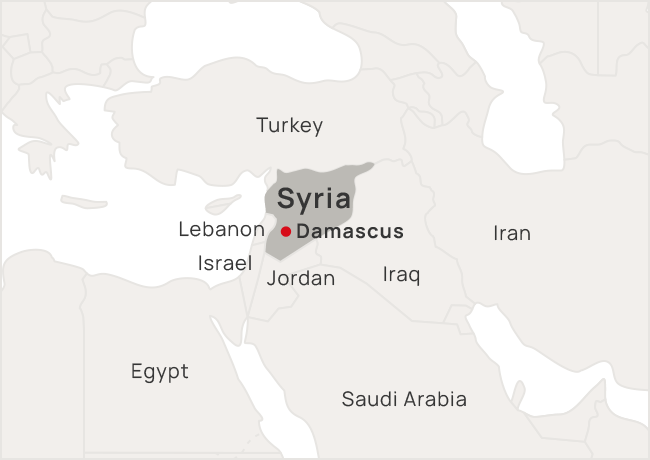
Map & Basic Information
-
Area
185,000 square kilometers (about half the size of Japan)
-
Population
21.56 million (estimated July 2022 CIA The World Factbook)
-
Capital
Damascus
-
Ethnicity
Arabs: approx. 75%, Kurds: approx. 10%, Armenians and others: approx. 15% (2022 CIA The World Factbook)
-
Language
Arabic
-
Religion
Islam: 87% (Sunni: 74%, Alawi, Shia, etc.: 13%), Christian: 10%, Druze: 3% (2022 CIA The World Factbook)
Issues to be addressed
In Syria, approximately 16.5 million people are in need of humanitarian assistance. While nearly 500,000 people have returned from abroad as of the end of April 2025, approximately 4.5 million people remain displaced, and approximately 7.4 million people remain internally displaced. Children and people with disabilities face particularly difficult circumstances.
Activities
Support for Syrian returnees
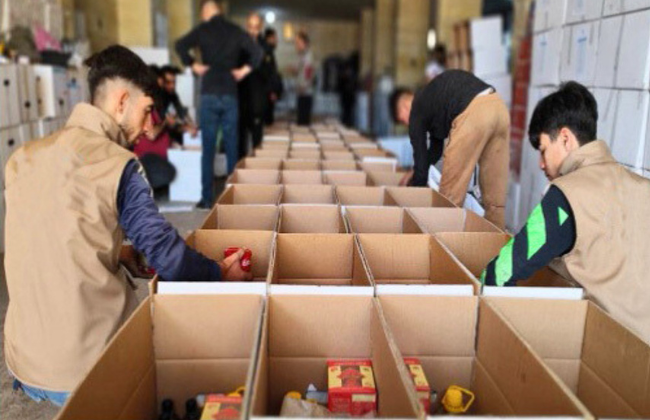
Employees of a cooperating organization inspecting supplies
With the fall of the Assad regime, many Syrians have returned to their homeland from displaced areas at home and abroad. AAR distributed nutritionally balanced food and basic hygiene items to more vulnerable households, including those with people with disabilities and chronic illnesses.
Support Children with Disabilities
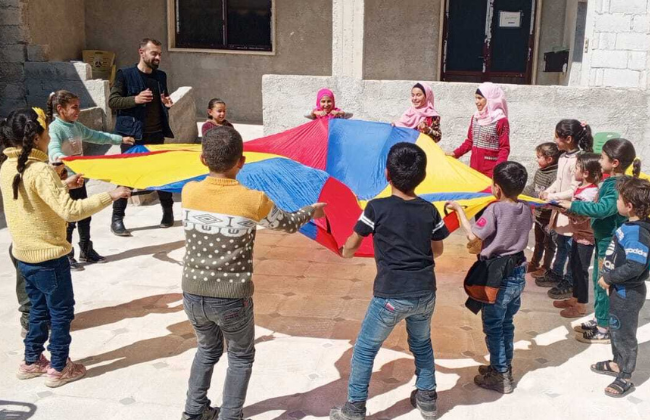
Children participating in group work
AAR promotes activities such as providing individual support to children with disabilities and their parents/guardians, creating a safe environment for children. We provide assistive devices, support for rehabilitation, referrals to outside agencies as needed, and study sessions on mental and physical care that can be done at home.
Major Activities in Past
-
2021 - 2024
Support Livelihoods through Agriculture
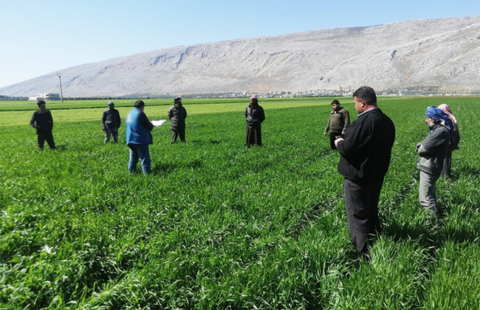
To improve wheat yields, we distribute seeds and fertilizers to small farmers and provide training on cultivation methods.
-
2015 - 2021
Risk Aversion Education
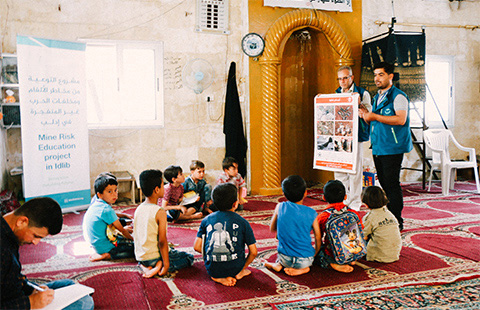
More than 60,000 people have participated in the training sessions that raise awareness about how to protect themselves from landmines and unexploded ordnance.
-
2014 - 2021
Food Distribution
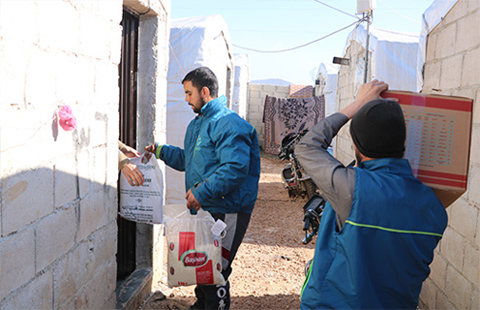
We distributed food to more than 510,000 internally displaced people in need due to prolonged displacement and lack of means of livelihood.