“We Want to Live Somewhere Safe” Food Distribution in Coastal Communities: Philippines Earthquake Response
03/07/2026 ( update 02/07/2026 )
Three weeks have passed since the major earthquake that struck off the southern coast of the Philippines on June 8. Although the government has been distributing food assistance in affected areas, many communities along the coast near the epicenter and in remote mountainous areas have yet to receive sufficient support. In partnership with a local organization, AAR Japan (Association for Aid and Relief, Japan) is providing food assistance to those in need. Shiori Kiryu of AAR’s emergency response team reports from the field.
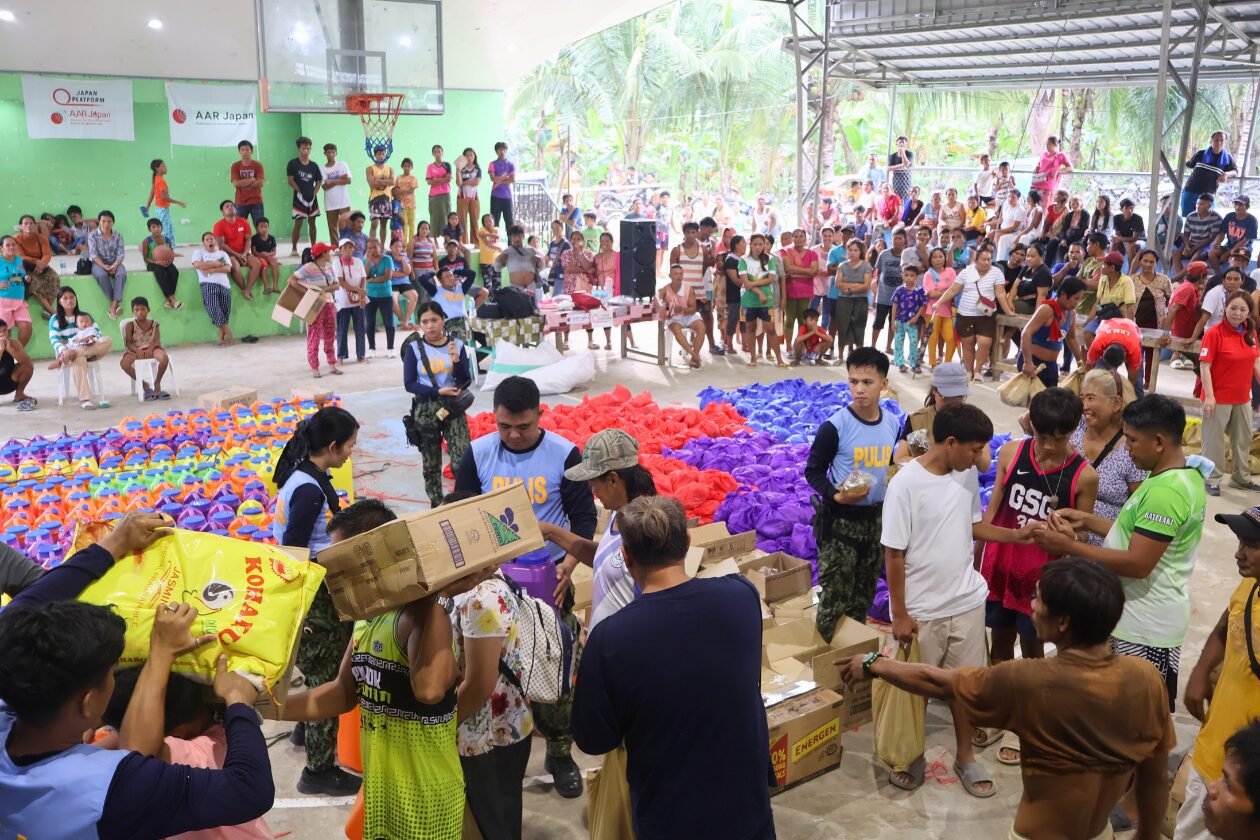
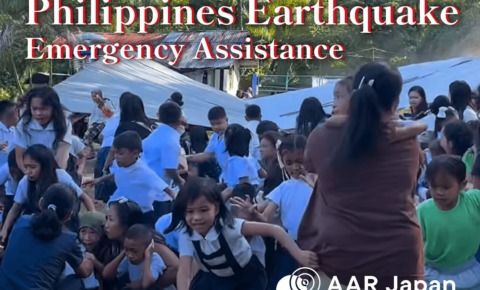
People gather at the distribution site in Glan, Sarangani Province, June 26
Many of the food packages distributed by the government contain enough supplies for only two to three days. Since immediately after the disaster, AAR’s local partner, PHILRADS, has prioritized delivering relief items to hard-to-reach communities where assistance has been limited.
Based on a needs assessment conducted in Glan, Sarangani Province, AAR and PHILRADS decided to distribute food packages containing rice, canned goods, cooking oil, and biscuits, along with drinking water and water containers. On June 26, these relief kits were provided to approximately 400 households whose homes had been completely destroyed or partially damaged and who were facing economic hardship.
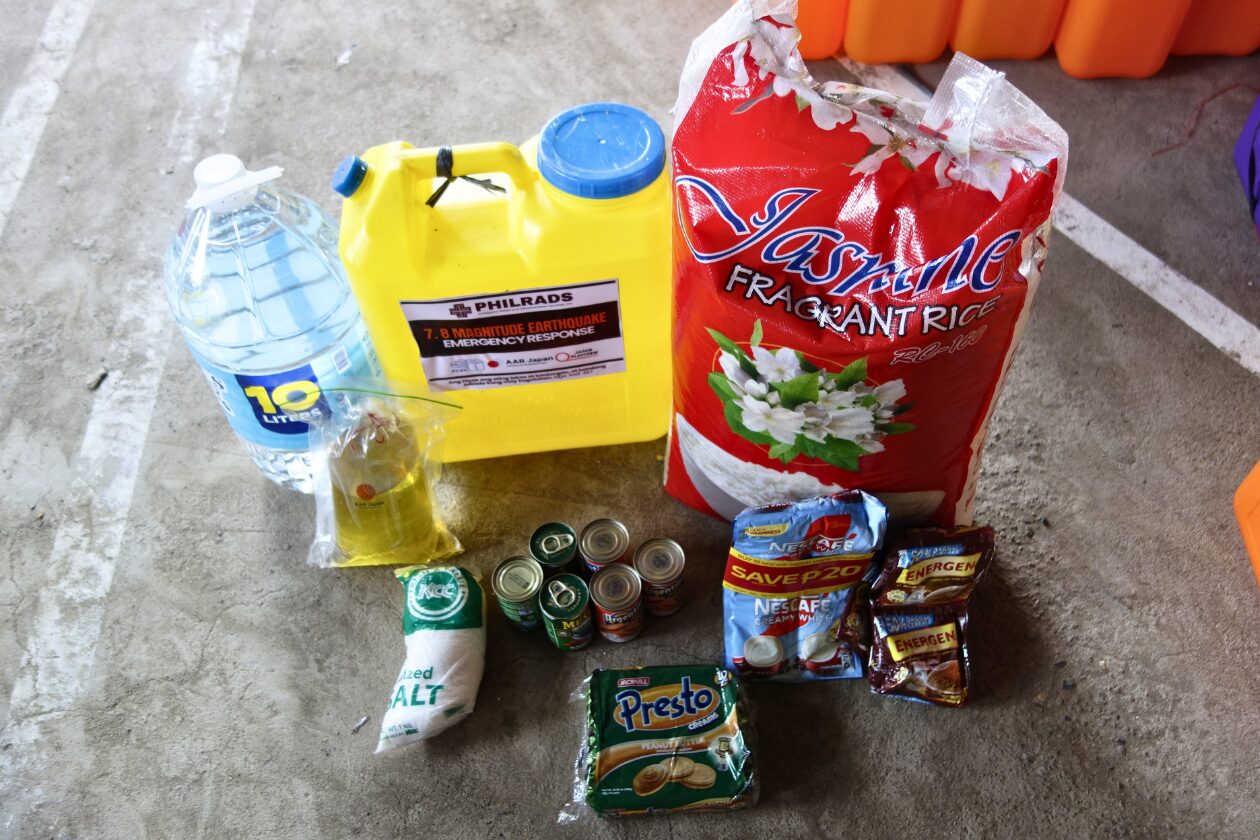
Relief supplies distributed to affected families. The food package is designed to support a typical Filipino household of four to five people for about one month.
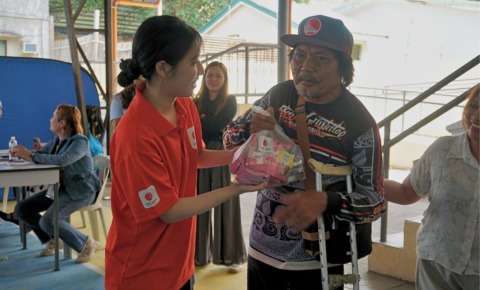
The distribution took place at a basketball court in Batulaki, a coastal community located in the southeastern part of Glan. When the relief supplies arrived, the gathered residents expressed their delight. Smiling broadly and offering words of thanks, people received the items from AAR and PHILRADS staff.
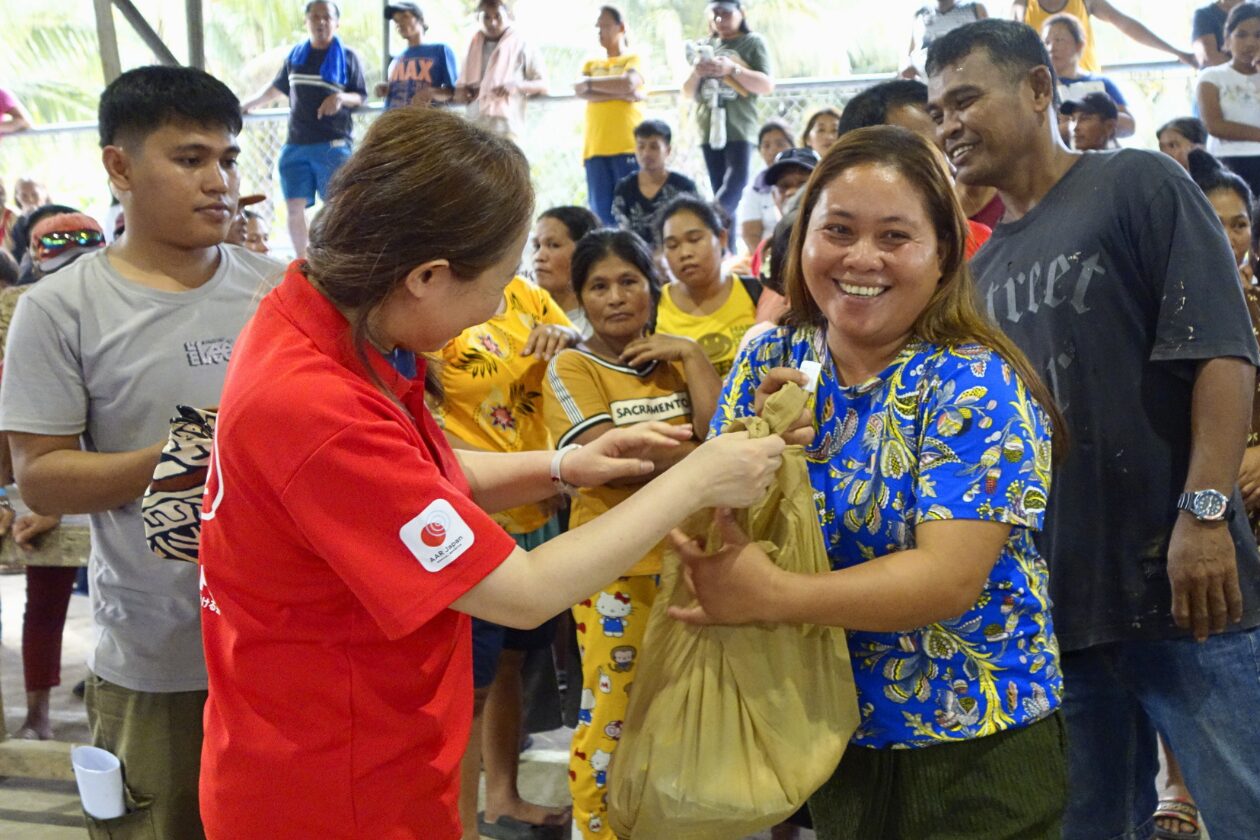
A woman smiles after receiving relief supplies.
Batulaki is home to many families who rely on fishing and farming for their livelihoods. Jecyl’s husband worked as a fisherman, but following the earthquake, the water receded from the coast, making it impossible to fish.
“My husband lost his livelihood, so we had been anxiously waiting for additional assistance,” Jecyl said. “The food we received before only lasted a few days. We are truly grateful to receive so much support.”
According to Jecyl, the area where her family lived has been declared off-limits because of the risk of landslides.
“We are too afraid to go back home. At the evacuation site, the tents are covered only with coconut leaves. Strong winds can easily knock them down, and when it rains, they flood. We want to live somewhere safe. That is our greatest hope right now.” With tears welling in her eyes, Jecyl shared her story.
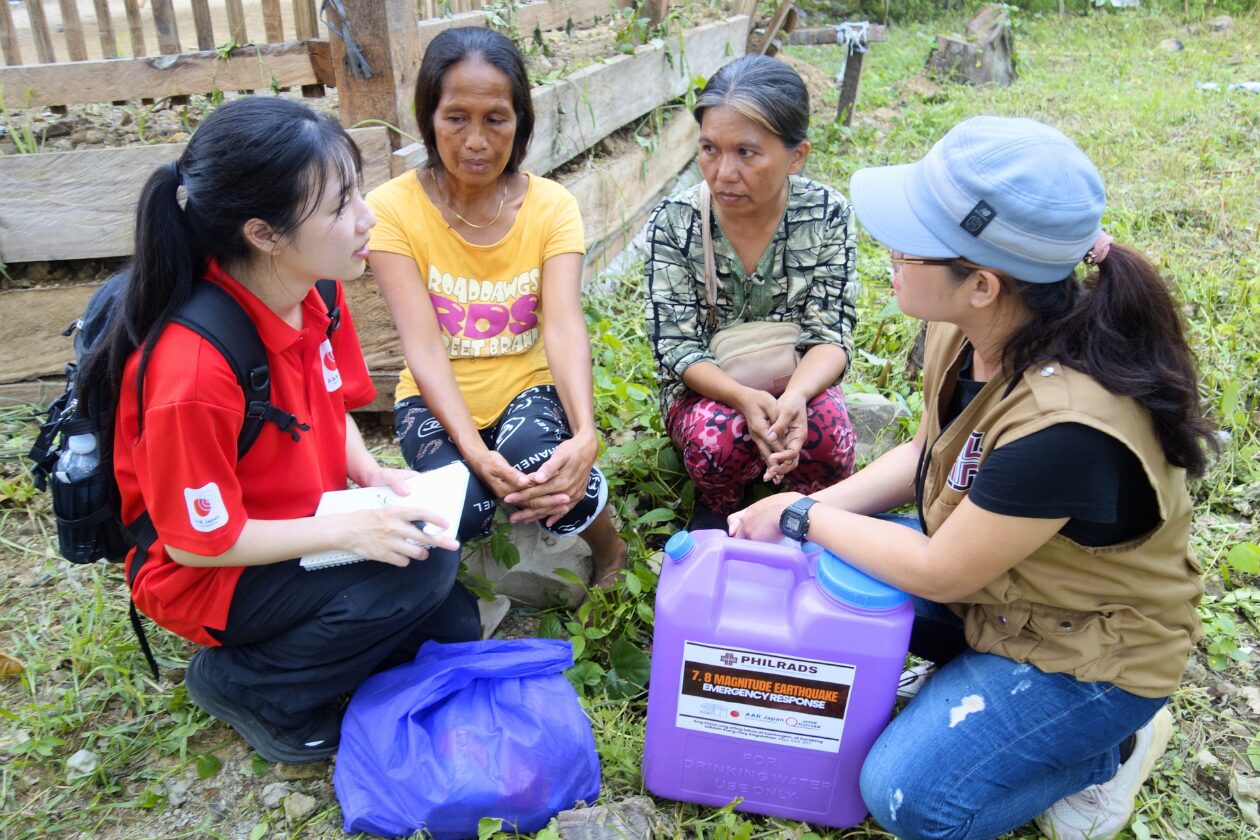
Jecyl (second from right) recounts her experiences during and after the earthquake.
While I was speaking with Jecyl, a small aftershock occurred. I could barely feel it, but her expression instantly changed. She reflexively grabbed the arm of the woman sitting next to her. It was a powerful reminder of the deep fear that remains etched in the minds of those affected by the disaster.
Even three weeks after the earthquake, many survivors still have no clear prospects for housing or rebuilding their livelihoods. AAR will continue to monitor the evolving needs of affected communities and provide the assistance that is most urgently required.
We sincerely ask for your continued support for AAR’s emergency response to the Philippines earthquake, to help affected families rebuild their lives and regain a sense of security.
Please support
We appreciate your cooperation with our emergency response to the Philippines Earthquake.