One Month After the Kumamoto Earthquake: Current Conditions on the Ground and Support Needed Going Forward
27/08/2026
One month has passed since the Kumamoto earthquake struck. While the initial chaos in the immediate aftermath has begun to settle, challenges facing affected communities are shifting to a new phase, including prolonged shelter life and the rebuilding of homes. Chiaki Furukawa, Secretary General overseeing AAR’s emergency response, reports on the current situation in the disaster-affected areas and the support that will be needed going forward.
Lessons from Ten Years Ago, Still Alive in the Disaster-Affected Areas
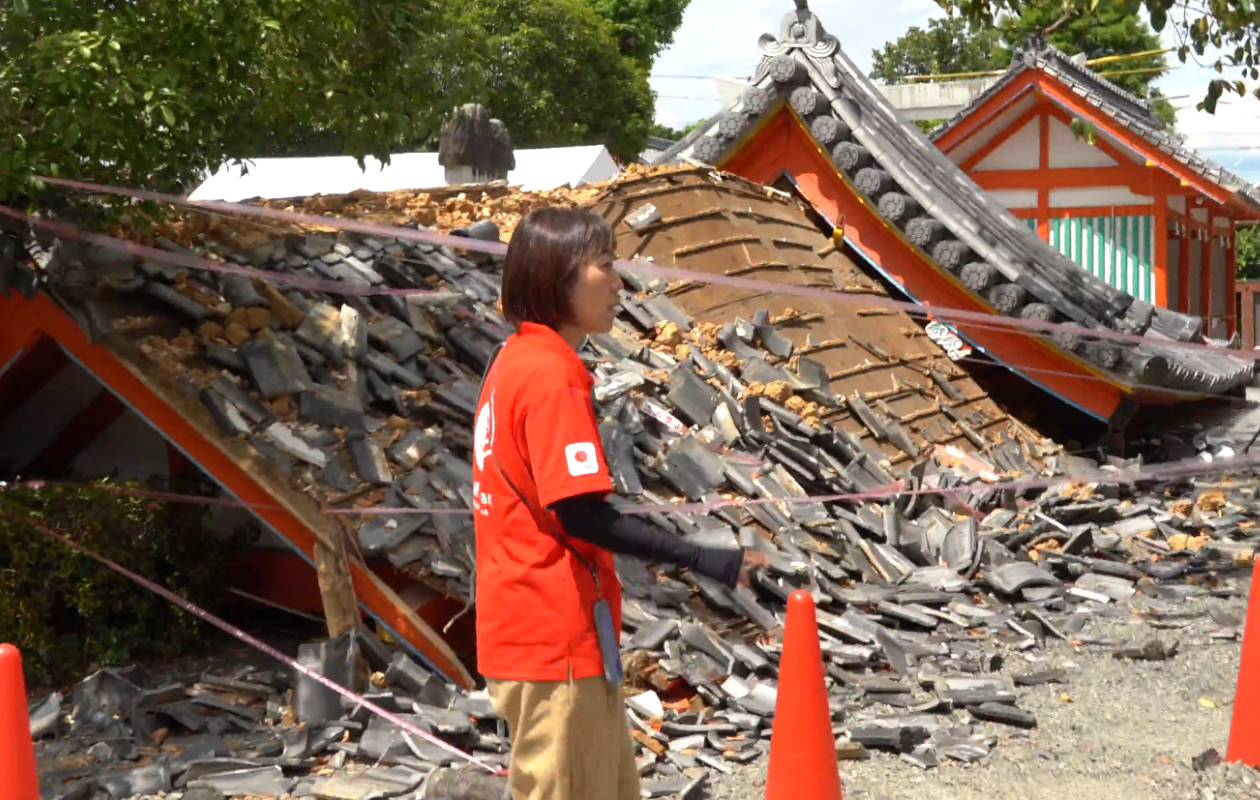
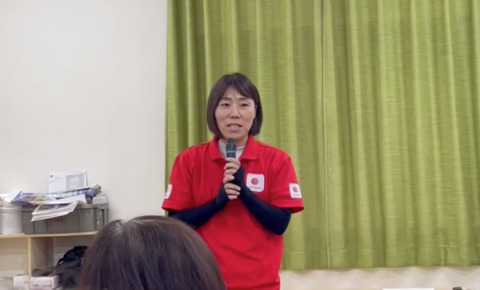
AARSecretary General Furukawa in Yatsushiro City, Kumamoto Prefecture on August 17,2026
During the Kumamoto earthquake ten years ago, in 2016, I took part in the emergency response team, working on relief supply distribution and the restoration of facilities for people with disabilities. This time, I traveled to the disaster-affected areas in mid-August, about two weeks after the earthquake, to coordinate support activities and assess needs on the ground. There, I repeatedly heard people speak of “the lessons of ten years ago.” The government’s response to this earthquake was swift: evacuation centers were quickly opened across the region and began accepting relief supplies, and distribution hubs were set up early on.
The experience from ten years ago was also clearly reflected among residents. For example, at shelters where the administrative response had not yet caught up, local residents took the initiative to organize things themselves. There were also spontaneous efforts based on lessons from shelter life a decade ago, such as taking turns keeping watch at entrances that needed monitoring.
Support to Fill the “Last Mile”
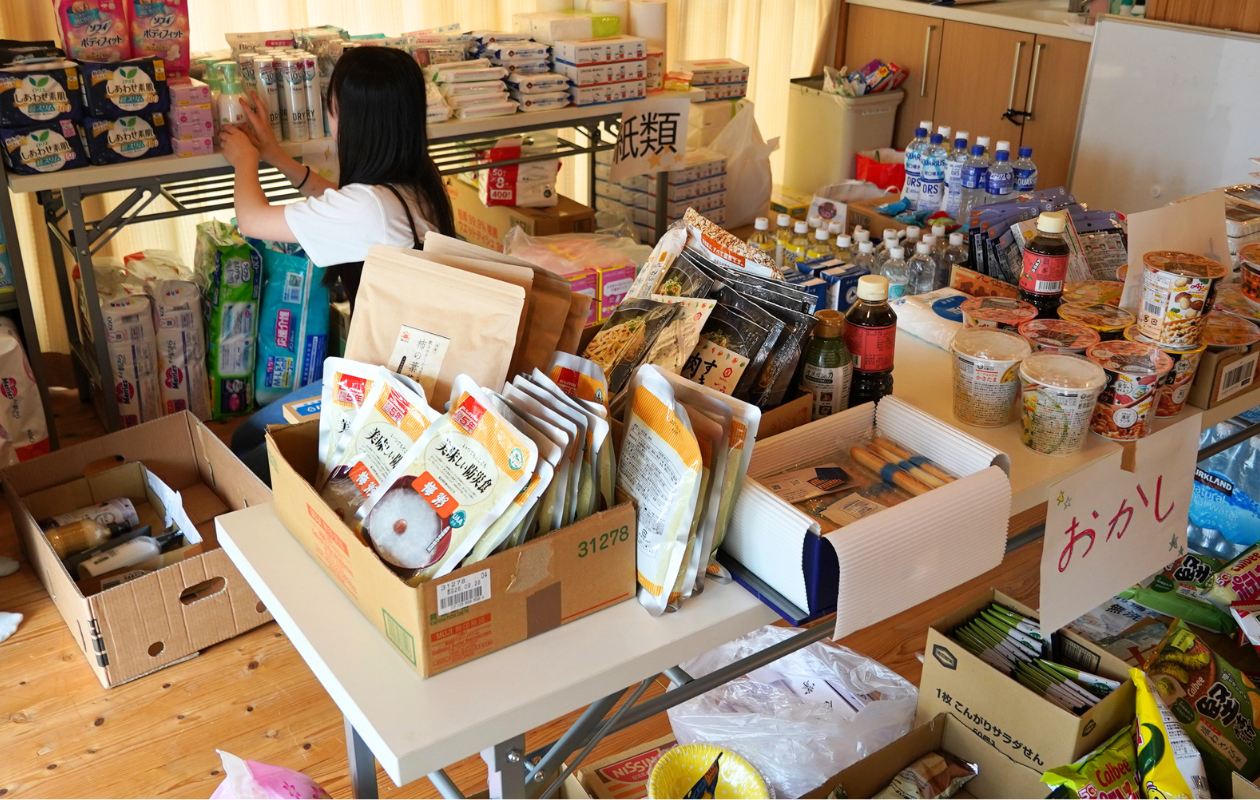
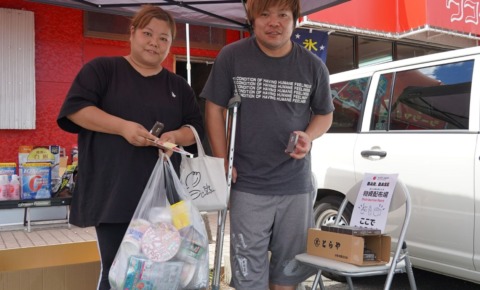
A space set up to receive relief supplies at the Popins Center for Child and Family Support in Uki City on August 17, 2026
One thing that stood out was the number of resident-led relief distribution sites that had sprung up in various locations. As in past disasters, this earthquake has also brought the so-called “last mile” problem—relief supplies reach central collection points but fail to reach the people who actually need them. To address this problem, residents have taken it upon themselves to set up distribution hubs and get supplies to people within their own communities.
AAR has begun supporting one such distribution hub, run by Popins Kumamoto in Uki City. The organization normally operates as a child and family support center, but in response to the earthquake, it has been bringing in supplies from large collection points and distributing them locally. When I visited, I saw children on their summer break helping elderly residents carry home heavy loads, such as bottled water.
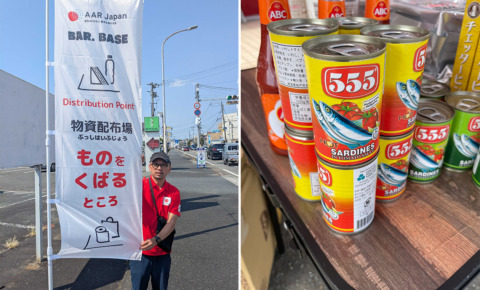
However, even at the prefecture’s large-scale collection points, certain items—such as sanitary products and food wrap—can be hard to come by. AAR is supporting Popins Kumamoto’s efforts by quickly providing supplies that meet these specific needs. While logistics in the disaster-affected areas are gradually recovering, AAR expects to continue efforts to fill this “last mile” gap through around mid-September.
The Challenge of “Water”
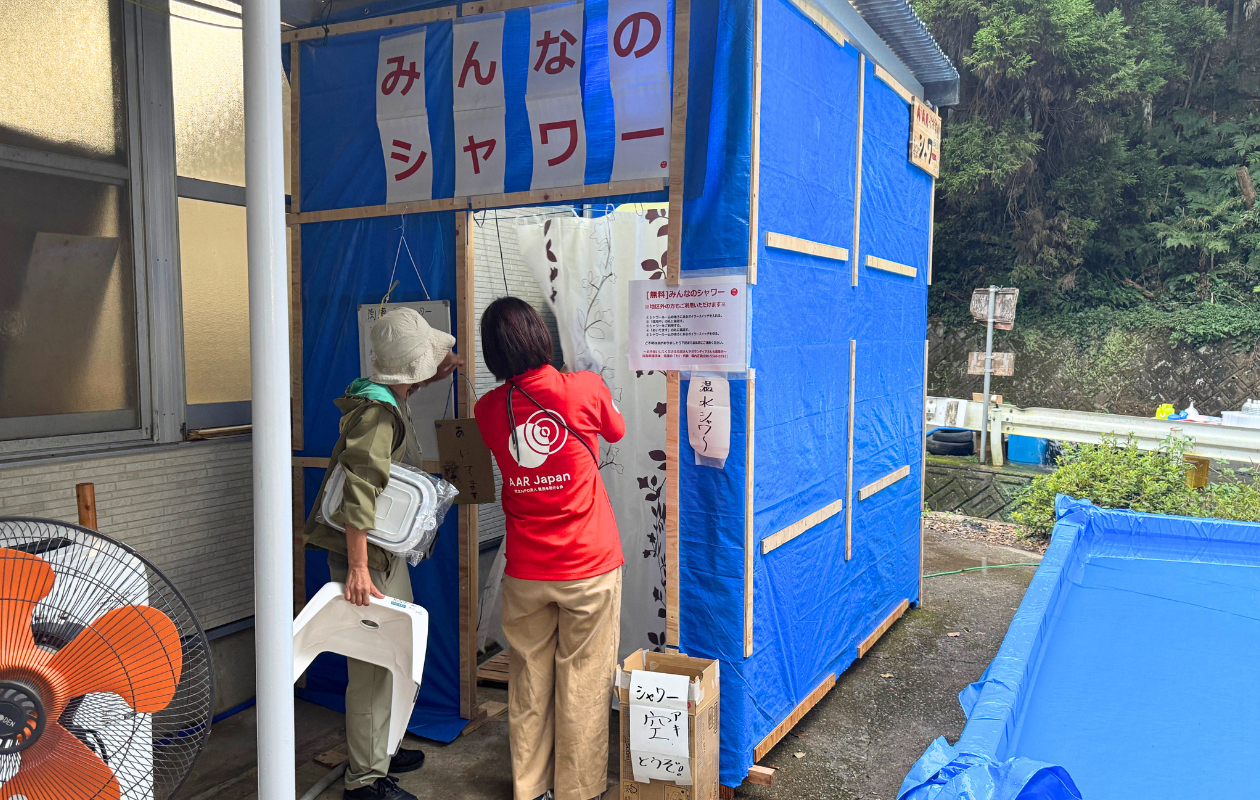
AAR’s Chiaki Furukawa inspects a shower room set up at a community center in Yatsushiro City on August 16, 2026
Water remains one of the biggest challenges in the disaster-affected areas. It has been reported that water outages have been resolved, but this mainly refers to the restoration of main water pipes—water still has not reached many individual households. Even after water service is restored, many households cannot immediately return to normal water use due to leaks within their own properties. In some households, the water contains sand, making it unusable for anything other than toilets—not even for bathing or drinking.
Without access to water, cooking is not possible, so the need for meal distribution is expected to continue. AAR will keep providing meal support in coordination with partner organizations, tailored to conditions in each area.
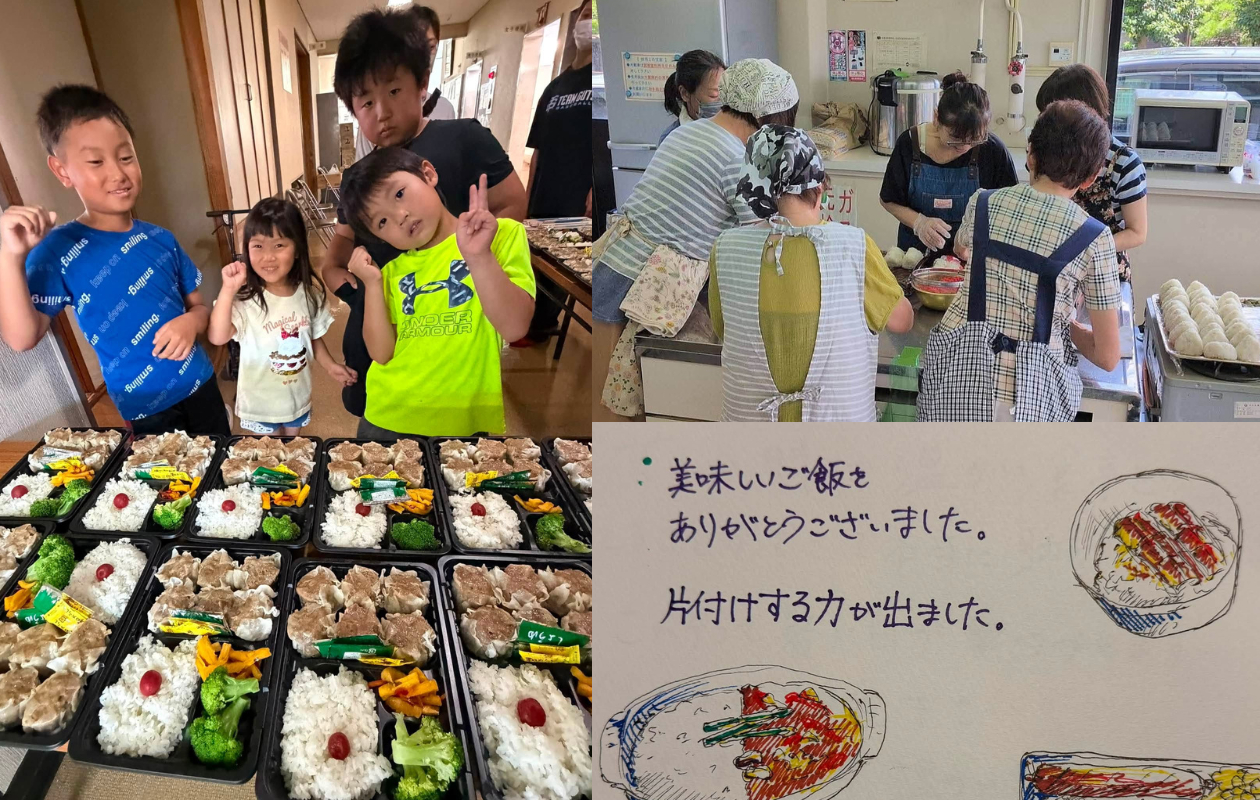
Meal distribution carried out in partnership with the NPO Peace Project
Even as demand for daily necessities begins to ease, the need for bottled drinking water is likely to continue, and AAR will keep up its distribution efforts. In addition, AAR plans to continue setting up temporary shower facilities as needed, depending on conditions in each area.
Medium- to Long-Term Support for People with Disabilities and Others Requiring Special Assistance
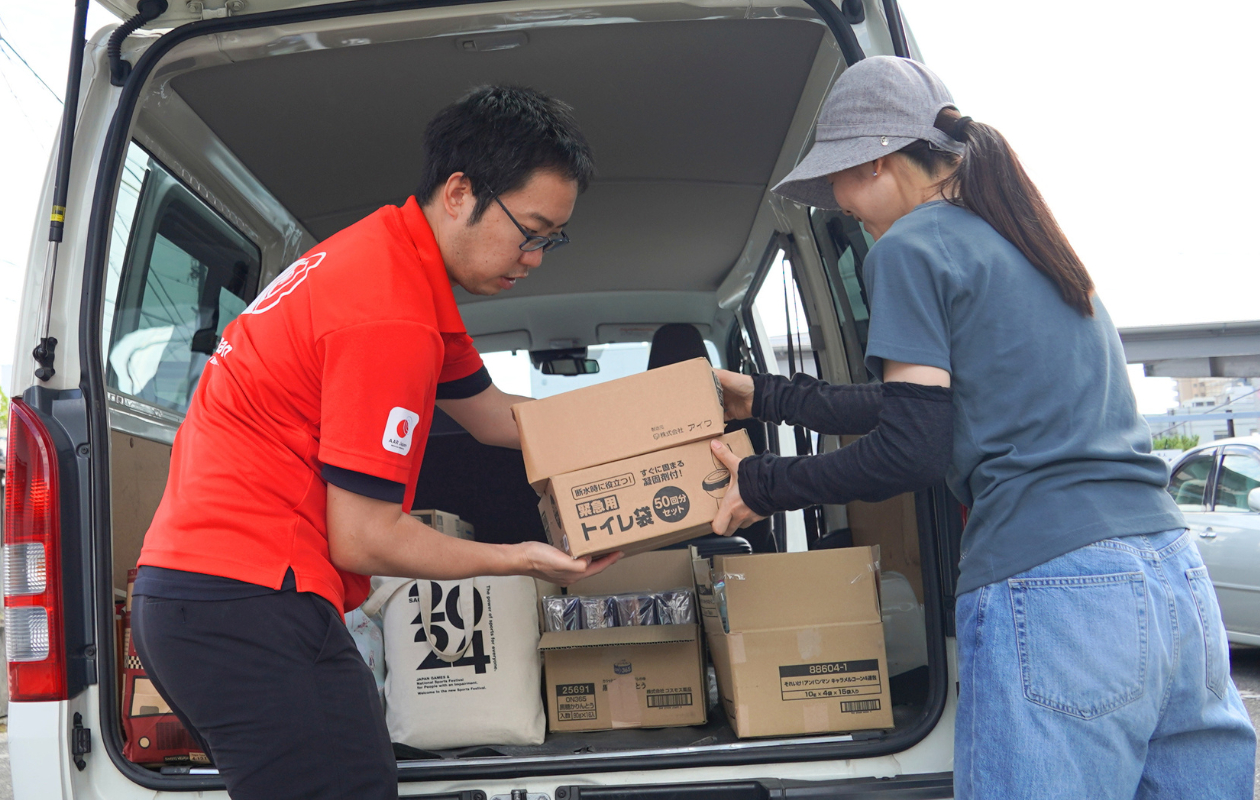
Namatame, a member of AAR’s emergency response team, loads supplies bound for a welfare facility
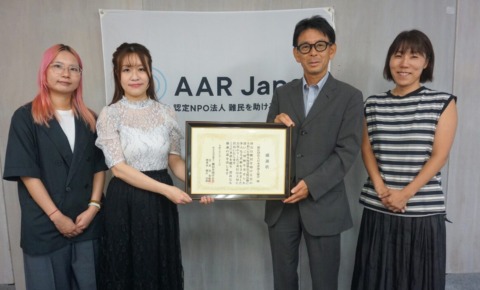
People with disabilities are especially vulnerable to the effects of changes in their environment during shelter life. When the facilities or welfare services they normally rely on are disrupted, rebuilding their lives takes longer, meaning the support they need extends into the medium and long term. AAR has begun supporting the Disaster Area Support Center for People with Disabilities, which provides ongoing assistance to disaster-affected people with disabilities.
Sadly, some facilities for people with disabilities that were damaged ten years ago have been damaged again in this earthquake. Going forward, AAR will also work on restoring these facilities and supporting their equipment needs. Support for foreign disaster survivors will also continue, including shower assistance for those who feel uncomfortable using public bathing facilities.
When AAR concluded its support activities for the 2016 Kumamoto earthquake, I never imagined we would once again be providing emergency relief in Kumamoto. AAR will continue working alongside the people of Kumamoto as they strive to rebuild their lives after experiencing two major earthquakes in just ten years.. We kindly ask for your continued support for Kumamoto earthquake emergency response.
Please support
We appreciate your cooperation with our emergency response to the Kumamoto Earthquake.